Science Leader - IMP 3
BAS Science Strategy Executive Group, Palaeo Environments, Ice Sheets and Climate Change team

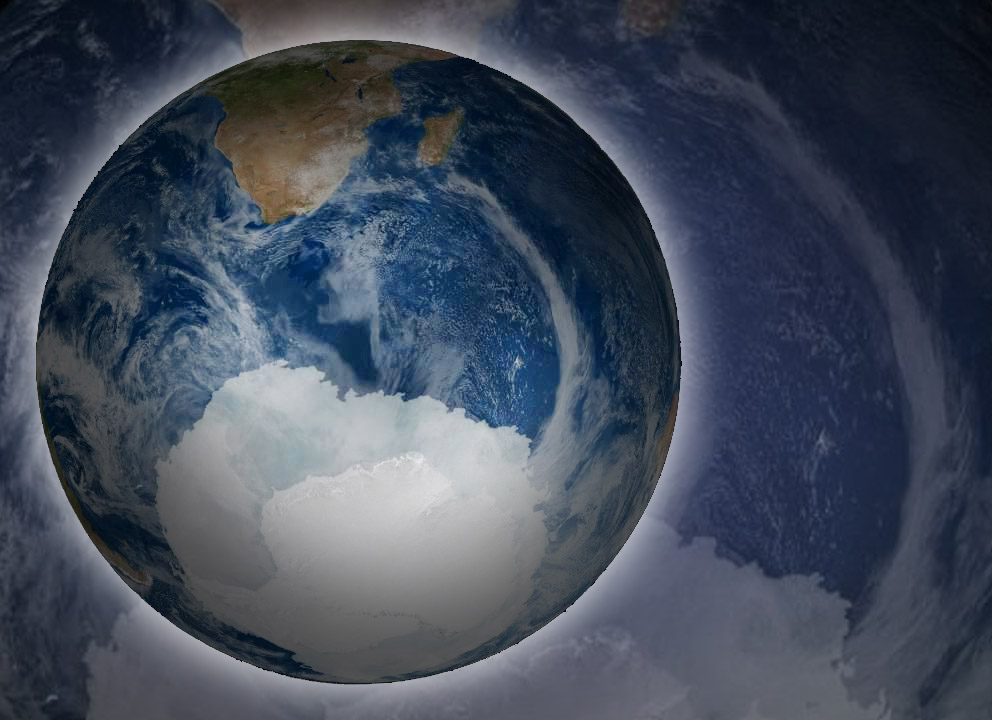
We study how ice sheets, oceans and the global climate have changed over timescales of decades to millions of years, and how life has evolved in response to these changes.
We specialise in providing detailed records of climate and environmental change from the polar regions. By understanding past changes, we can reduce uncertainty in predictions of future climate and sea level change. This knowledge contributes to the British Antarctic Survey strategic science themes of climate change science for developing resilience, protecting coastal and technical infrastructure and safeguarding our future.
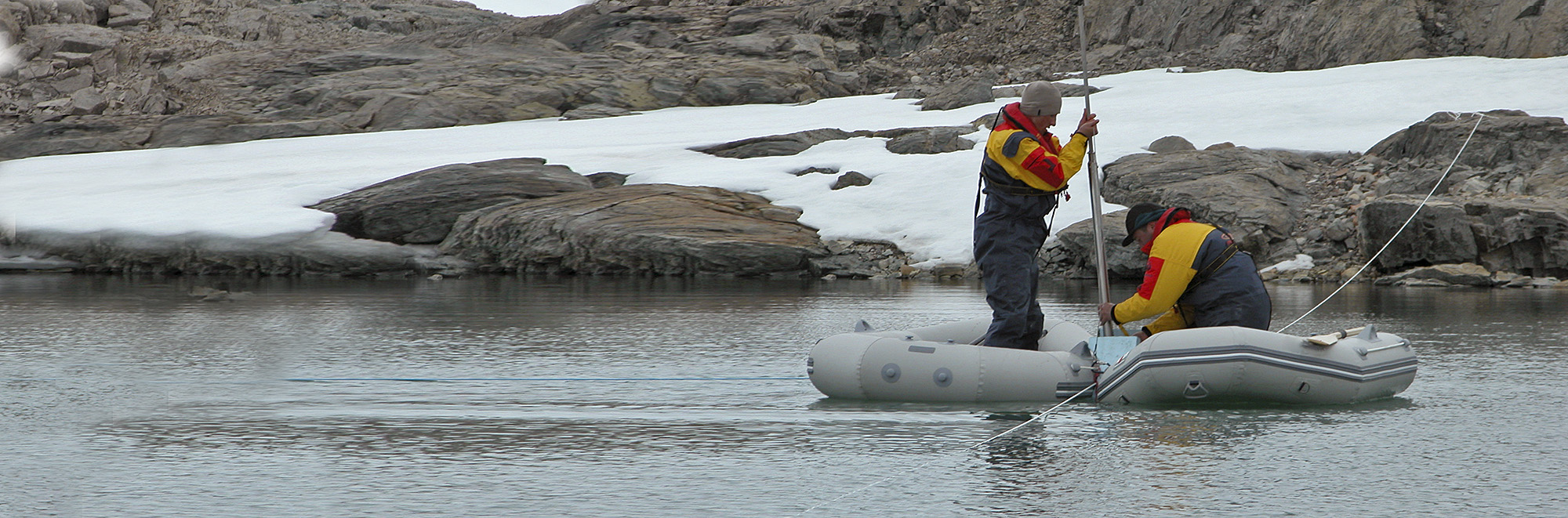
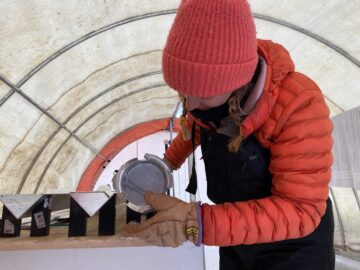
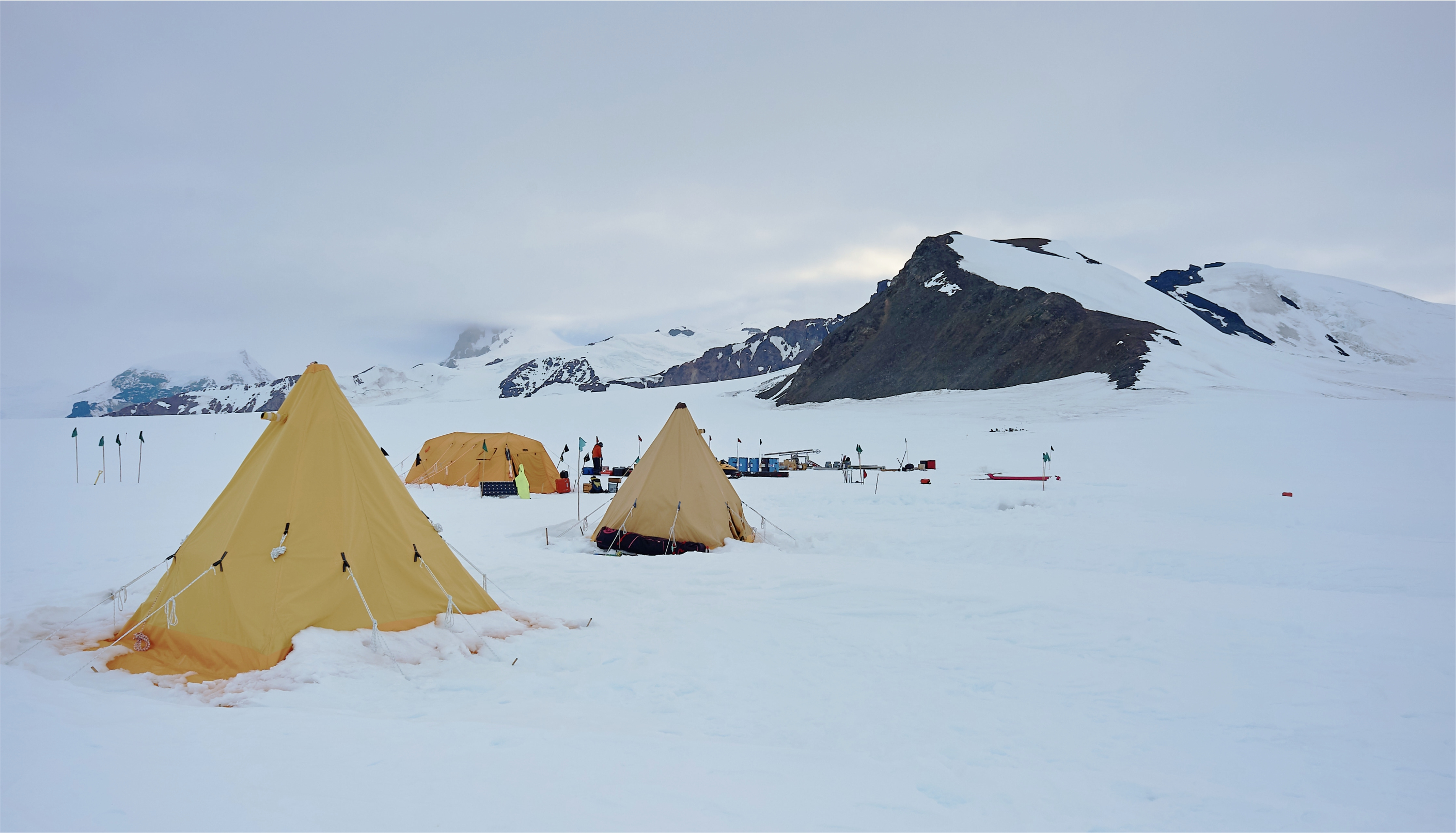
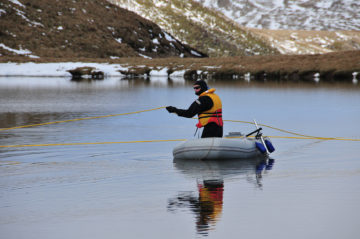
BAS scientists extracting a sediment core from a remote lake on Horseshoe Island, Antarctic Peninsula. The climate record in this core spans approximately 20,000 years.
We study how polar ice sheets and ice shelves responded to environmental changes in the past. This helps improve forecasts of global sea level and ice mass loss. Our data is also used to validate and improve ice sheet models.
We investigate the Southern Hemisphere westerly winds and their impact on ice sheet behaviour and the global carbon cycle. By examining marine and terrestrial sediments, we can detect when the impact of human activity begins to exceed natural climate variability.
Our research looks at changes in Southern Ocean circulation. We study how sea ice, meltwater, and biological productivity influenced past climate. These insights help predict future ocean-driven climate changes.
We investigate how high CO2 levels in the geological past affected climate. This includes the major transition from a greenhouse to an icehouse climate that took place millions of years ago. We do this by studying drilled sediment cores and ecological community analysis of geological outcrops.
We use advanced methods to unlock ice sheet and climate history. They include:
Sampling and analysing marine, sub-ice shelf and lacustrine sediments to obtain records of changes in climate, ice sheet extent and ice shelf presence or absence.
Sampling and analysing subglacial sediments to improve knowledge of how their nature and subglacial hydrology influence glacier flow.
Collecting and analysing geological samples from outcrops and drilled shallow rock cores to determine how long they have been exposed above the ice surface and using the results to reconstruct ice surface elevation changes.
Collecting and analysing airborne geophysical survey data with aircraft and drones to reveal ice sheet thickness and subglacial geology.
Collecting and analysing marine geophysical data with ships and autonomous underwater vehicles to reveal the topography and characteristics of the former ice sheet bed in areas ice has retreated from.
Our team plays a leadership role in, and contributes to, global science initiatives including the:
We also participate in drilling initiatives including the IODP3, SWAIS2C and we collaborate in planning expeditions using the MeBo sea-floor drilling system.
We provide policy briefings and science updates to UK government departments, including the Foreign, Commonwealth & Development Office (FCDO).
We also support UN climate and ocean frameworks.
GIANT is a pioneering science project that will test the potential for early warning of a critical climate tipping point.
Science Leader - IMP 3
BAS Science Strategy Executive Group, Palaeo Environments, Ice Sheets and Climate Change team

Palaeoceanographer

Radioglaciolgist
Ice Dynamics and Palaeoclimate team, Palaeo Environments, Ice Sheets and Climate Change team

Palaeobiologist/Antarctic Marine Invertebrates
PDRA Quaternary Sedimentologist/Geochemist
Sedimentologist
Marine Geophysicist
Glacial Sedimentologist (SWAIS2C)
Geochemist
Aerogroup Gravity
Dep Science Leader of Palaeo Environments IMP 3
BAS Science Strategy Executive Group, Palaeo Environments, Ice Sheets and Climate Change team
Palaeo Ice Sheet Modeller
Ice Dynamics and Palaeoclimate team, Palaeo Environments, Ice Sheets and Climate Change team

Palaeoecologist
Survey Geologist
Palaeoclimatologist
Sedimentologist

Machine Learning Research Scientist
Polar Artificial Intelligence team, Palaeo Environments, Ice Sheets and Climate Change team

Palaeobiologist
This project will tackle the the question of how strongly changes in ocean circulation affect global climate.
This project examines Antarctic sea-ice’s role in global climate, using marine sediment and ice core records to reconstruct past sea-ice extent.
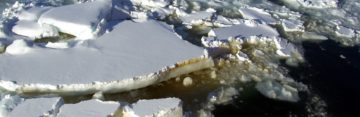
This project attempts to reconstruct changes in the intermediate-deep ocean density gradient in the South Atlantic across the last deglaciation in order to assess the link between deep ocean stratification and atmospheric CO2.
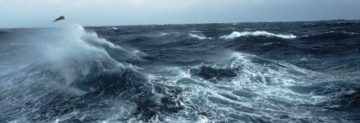
Research project investigating how shifting southern westerly winds drive warm Circumpolar Deep Water onto the West Antarctic Peninsula shelf, accelerating glacier melt, reducing sea ice, and transforming marine ecosystems.
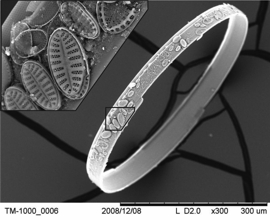
By studying the geochemistry of deep marine sediments recovered from the Southern Ocean sea floor, this research aims to establish the extent of this reorganisation of deep water circulation, and to better understand its potential impacts on past climate.

This research aims to improve estimates of Antarctica’s contribution to sea level. Sea level is currently rising at approximately 3mm/yr.
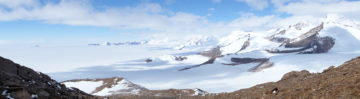
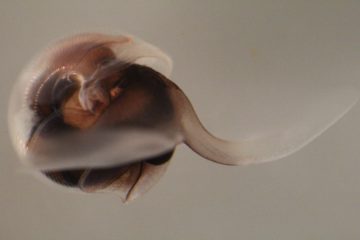
A project studying the impact of ocean acidification on pteropods, small shelled marine animals considered a sentinel species for ocean acidification.
Why does global biodiversity show such a steep increase just as climates were deteriorating?

In this NERC-funded project, we are generating Southern Hemisphere Westerlies (SHW) proxy records from each of the three major sectors of the Southern Ocean, focusing on subantarctic islands situated in the core belt of the SHW.
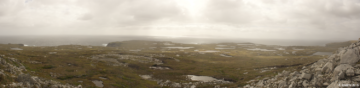
This research focuses on investigating the glacial histories of Arctic ice sheets and ice caps using the marine geological record preserved on continental margins.

During this project essential survey data was collected to help plan future deep ocean drilling expeditions.
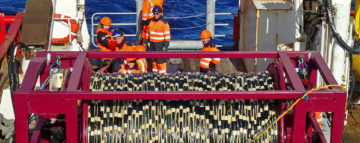
IMCONet is an international Research Network that follows an interdisciplinary approach to understand the consequences of Climate Change in coastal Western Antarctica.
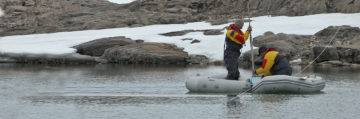
The aim of this NERC funded project is to determine how long Circumpolar Deep Water has been present on the shelf and whether the rate of oceanic melting we see today has varied over longer timescales.
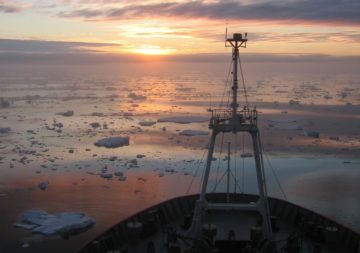
BEAMISH drilled through over 2 km of ice on Rutford Ice Stream to discover when the West Antarctic Ice Sheet last collapsed and how water and soft sediments beneath it help the ice flow towards the sea.
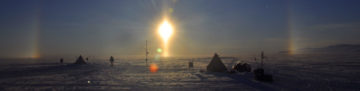
ANiSEED reconstructed millennial-scale ice sheet change in the western Amundsen Sea Embayment, Antarctica, using high-precision exposure dating.
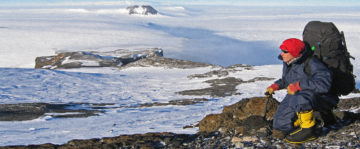
GHC will gather information about past ice sheet behaviour and relative sea level change in the Thwaites Glacier system. Determining the timing and magniture of past episodes of thinning and retreat and subsequent re-advance is important to provide a context for the current and future behaviour of Thwaites Glacier.
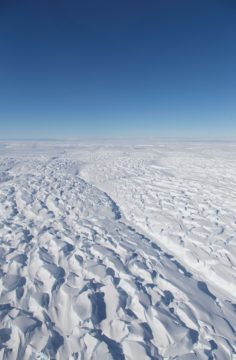
THOR examined sedimentary record both offshore from the glacier and beneath the ice shelf, together with glacial landforms on the sea bed, to reconstruct past changes in ocean conditions and the glaciers response to these changes.
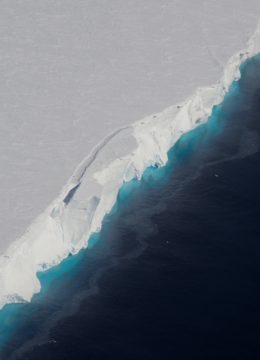
A major new analysis has confirmed British Antarctic Survey as the world’s leading centre for Antarctic and Southern Ocean research.
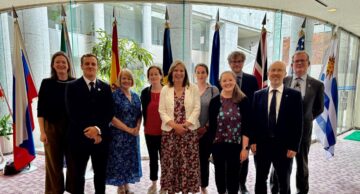
British Antarctic Survey (BAS) researchers have been selected for funding from The Advanced Research + Invention Agency (ARIA) to help improve our understanding of climate tipping points.
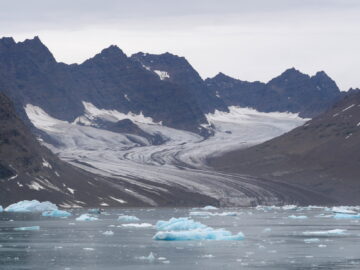
The Beyond EPICA-Oldest Ice project has successfully drilled a 2800-metre-long ice core consisting of ice which is over 1.2 million years old.
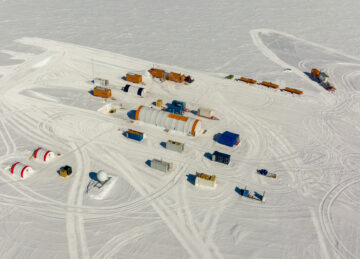
Over 30 researchers from international institutes are working on ice core drilling campaigns in Antarctica to probe the ice sheet’s behaviour, carbon cycling in the Southern Ocean, and the Earth’s climate history.
Thirty seven scientists and over 24 support staff are arriving in Antarctica to work on Thwaites Glacier.
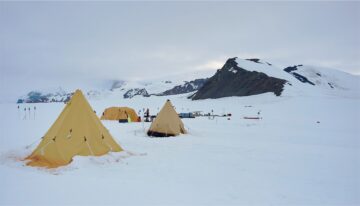
A research mission to Antarctica will study the effects of global warming on the West Antarctic ice sheet.
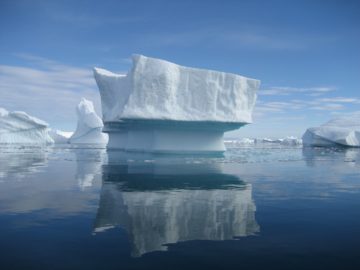
Researchers from British Antarctic Survey are heading to the Canadian Arctic this week to learn more about the impacts of increasing ship traffic in Inuit Nunangat. In recent years, climate […]
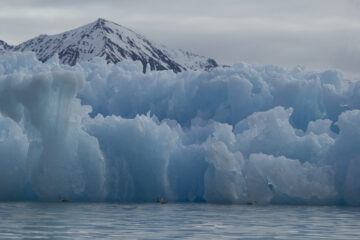
The West Antarctic Ice Sheet is shrinking, with many glaciers across the region retreating and melting at an alarming rate. However, this was not always the case according to new […]
Shelled pteropods, commonly known as sea butterflies, are increasingly exposed to ocean changes, but some species are more vulnerable to this threat. In a new study, published this month (11 […]
Nearly 60 scientists and support staff are on their way to Thwaites Glacier in West Antarctica. It’s part of an ambitious international effort to understand the glacier and surrounding ocean […]
Scientists have discovered one million year old marine DNA in deep-sea sediments of the Scotia Sea, north of the Antarctic continent. This is the oldest DNA recovered of this kind […]
Deep valleys buried under the seafloor of the North Sea record how the ancient ice sheets that used to cover the UK and Europe expelled water to stop themselves from […]
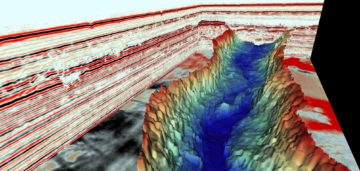
New high resolution images of the the seafloor in West Antarctica show past retreat of Thwaites Glacier. They reveal that at times in its past, retreat of the massive Thwaites […]
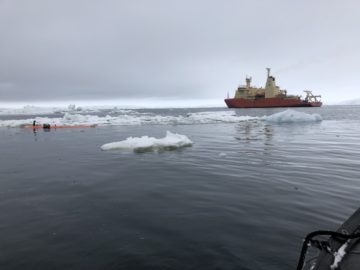
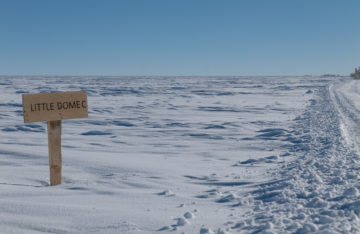
The first ice core drilling campaign of Beyond Epica-Oldest Ice has been successfully completed at the remote Little Dome C site in Antarctica – one of the most extreme places […]
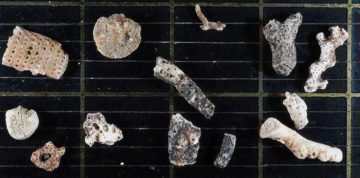
Far beneath the ice shelves of the Antarctic, there is more marine life than expected, finds a recent study in the journal Current Biology, published this week (20 December 2021). […]
Spectacular ice age landscapes beneath the North Sea have been discovered using 3D seismic reflection technology. Similar to MRI (magnetic resonance imaging) the images reveal in unprecedented detail huge seafloor […]

CAMBRIDGE: British Antarctic Survey welcomes the publication of the Intergovernmental Panel on Climate Change (IPCC) Working Group 1 component of its Sixth Assessment Report. This assessment brings together the latest advances in […]
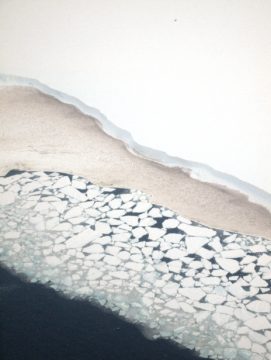
For the first time, geological records have been used to reconstruct the history of Larsen C Ice Shelf in Antarctica. The ice shelf is the largest remaining remnant of a […]
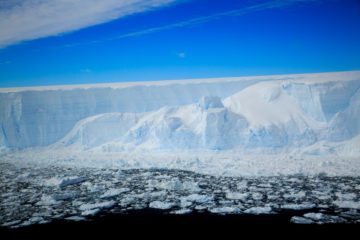
For the first time, researchers have collected data from underneath the remote Thwaites Glacier in West Antarctica using an underwater robot.
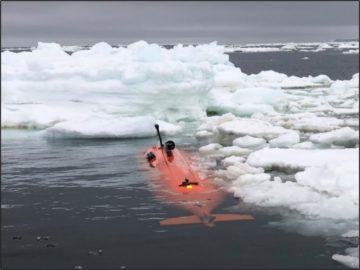
Polar climate scientists have created the most high resolution past record of the Southern Hemisphere westerly winds. The results, published this week (9 December) in the journal Communications Earth and […]
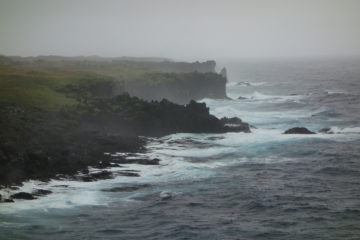
Newly discovered deep seabed channels beneath Thwaites Glacier in West Antarctica may be the pathway for warm ocean water to melt the underside of the ice. Data from two research […]
A new study, published this week in the journal Nature Climate Change, supports predictions that the Arctic could be free of sea ice by 2035. High temperatures in the Arctic […]
An international team of researchers has provided a new and unprecedented perspective on the climate history of Antarctica. From a sediment core collected from the seafloor in West Antarctica, they […]
Teams from the US and UK have successfully completed scientific fieldwork in one of the most remote and hostile areas of West Antarctica – coinciding with the 200th anniversary of […]
Nearly 100 scientists and support staff depart this week (13 November 2019) for the most ambitious mission to date for Thwaites Glacier in West Antarctica. In the second year of […]
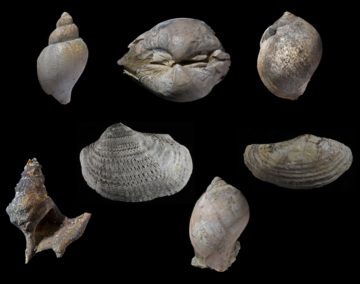
A new study shows how marine life around Antarctica returned after the extinction event that wiped out the dinosaurs. A team led by British Antarctic Survey studied just under 3000 […]
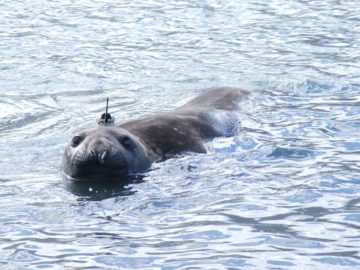
Scientists will use two species of seals to investigate a huge glacier in West Antarctica that is at risk of collapse. A team of over 20 polar scientists from the […]
An international team of scientists is travelling to the Amundsen Sea – one of the most vulnerable sectors of the Antarctic Ice Sheet – to answer vital scientific questions about […]
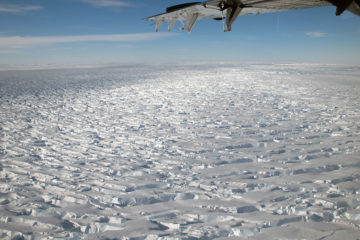
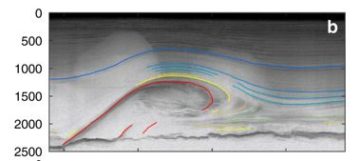
Fresh water freezing onto the bottom of the Greenland and Antarctic Ice Sheets leads to the formation of spectacular plume-shaped features, according to new research published today (7th November) in […]
Expert comment on IPCC Special Report
A new study of lake sediments from the sub-Antarctic reveals for the first time that increases in westerly winds are likely to reduce the ability of the Southern Ocean to […]
Report published July 2018
Pine Island Glacier in West Antarctica is one of the fastest-flowing glaciers in Antarctica. Over the last eleven years, four major icebergs have broken off from its floating ice shelf. […]
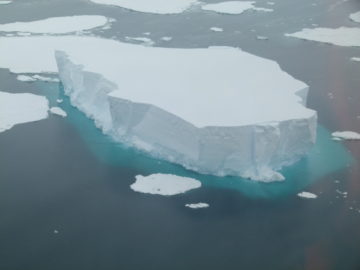
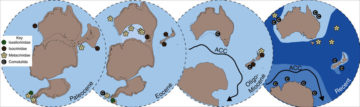
A new study of marine fossils from Antarctica, Australia, New Zealand and South America reveals that one of the greatest changes to the evolution of life in our oceans occurred […]
An animation of the giant iceberg that calved off the Pine Island Glacier in West Antarctica just over two months ago shows an unexpected break up. Satellite images revealed a […]
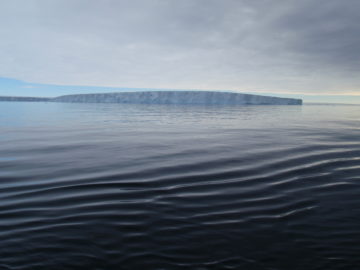
Thousands of marks on the Antarctic seafloor, caused by icebergs which broke free from glaciers more than ten thousand years ago, show how part of the Antarctic Ice Sheet retreated […]
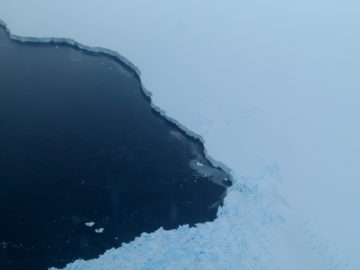
Wind-driven incursions of warm, deep water forced the retreat of West Antarctic glaciers from the end of the last ice age until 7,500 years ago and since the 1940s. These […]
Latest satellite images reveal a new 100-square-mile iceberg emerging from Antarctica’s Pine Island Glacier. The calving event did not come as a complete surprise, but is a troubling sign with […]
Researchers have provided new evidence that large sub-glacial lakes existed under the West Antarctic Ice Sheet during the last glacial period – around 20,000 years ago – a period when […]
The most comprehensive and high-resolution atlas of the seafloor of both Polar Regions is presented this week (Tuesday 25 April) at the European Geosciences Union General Assembly (EGU) in Vienna.
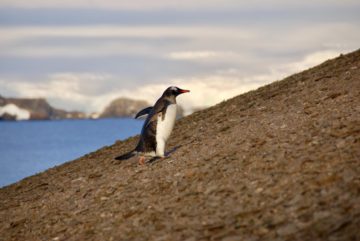
One of Antarctica’s biggest gentoo penguin colonies was repeatedly decimated by eruptions of the Deception Island volcano in recent millennia.
A new study reveals the sub-antarctic island of South Georgia – famous for its wildlife – was covered by a massive ice cap during the last ice age. The results […]
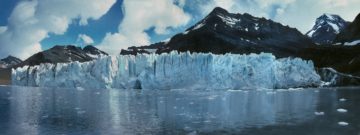
New study reveals when West Antarctica’s largest glacier started retreating Reporting this week (Wednesday 23 November) in the journal Nature an international team led by British Antarctic Survey (BAS) explains […]
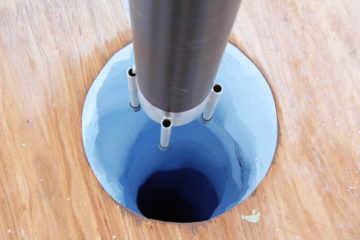
Research published this week by an international team of scientists, including the British Antarctic Survey, provides new insights into how carbon dioxide changed in the oceans surrounding Antarctica during glacial […]
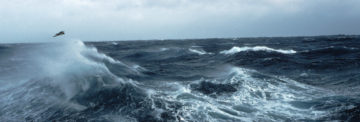
The catastrophic release of fresh water from a vast South American lake at the end of the last Ice Age was significant enough to change circulation in the Pacific Ocean […]
New season tackles ambitious science and logistical challenges The British Antarctic Survey (BAS) 2015/16 field season is underway with dozens of scientists and support staff – together with planes and tonnes […]
Sea-level rise from Antarctic collapse may be slower than suggested A new study by scientists in the UK and France has found that Antarctic ice sheet collapse will have serious […]
As the southern westerly winds drive the Antarctic circumpolar current around Antarctica, deep waters are forced up to the surface south of the polar front. Changes in the intensity with […]

Most comprehensive ice loss model A new international study is the first to use a high-resolution, large-scale computer model to estimate how much ice the West Antarctic Ice Sheet could […]
New study shows Antarctic ice shelf is thinning from above and below A decade-long scientific debate about what’s causing the thinning of one of Antarctica’s largest ice shelves is settled […]
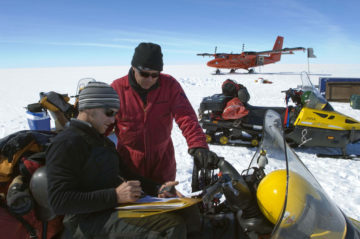
The Fifth Assessment Report (AR5) of the Intergovernmental Panel on Climate Change (IPCC) is published today. The report entitled Climate Change 2013: The Physical Science Basis, presents a synthesis of […]
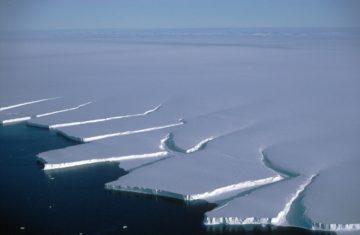
New climate history adds to understanding of recent Antarctic Peninsula warming Results published this week by a team of polar scientists from Britain, Australia and France adds a new dimension […]
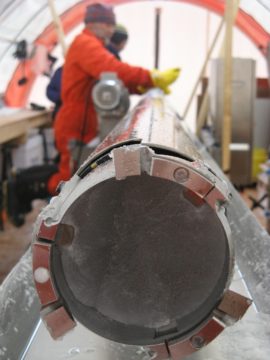
Warm ocean currents cause majority of ice loss from Antarctica Reporting this week (Thursday 26 April) in the journal Nature, an international team of scientists led by British Antarctic Survey […]
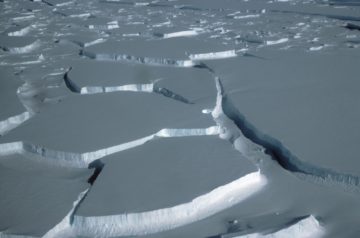
25th Anniversary of the Discovery of Ozone Hole This week British Antarctic Survey (BAS) commemorates the 25th anniversary of one of its most dramatic scientific discoveries — the ozone hole. […]
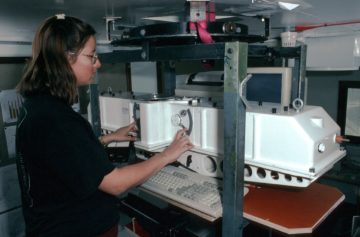
Huw Griffiths works in the Biodiversity Team at British Antarctic Survey. As he completes fieldwork in the Canadian Arctic with colleagues Cath Waller (University of Hull) and Steve Roberts (BAS), […]
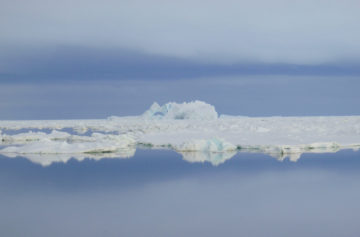
Dr Claus-Dieter Hillenbrand is aboard the drill ship JOIDES Resolution as part of the 8-week International Ocean Discovery (IODP) Expedition 379. This is the final entry in a series of […]
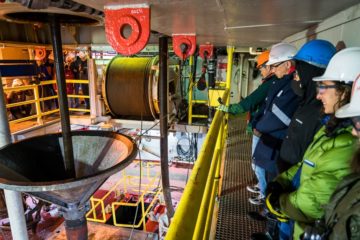
Dr Claus-Dieter Hillenbrand tells us more about what happens once a sediment core has been recovered from the seafloor.
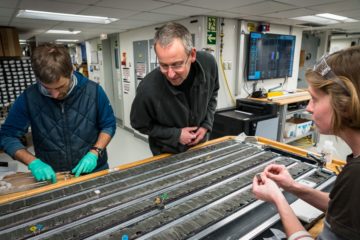
Dr Claus-Dieter Hillenbrand describes what it’s like drilling sediment cores on International Ocean Discovery (IODP) Expedition 379 in the Amundsen Sea, West Antarctica. Since the 31st of January we have […]
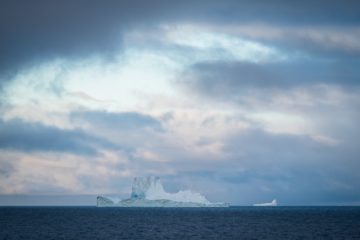
Dr Claus-Dieter Hillenbrand is a marine geologist at British Antarctic Survey (BAS). He is one of two UK scientists participating in International Ocean Discovery (IODP) Expedition 379 to the Amundsen […]
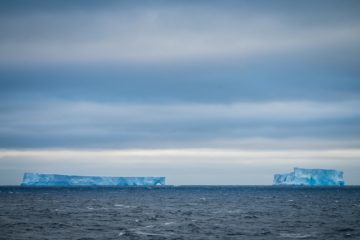
Matthew Chadwick is a member of the science team from British Antarctic Survey (BAS) currently aboard the RRS Discovery. Read on to gain an insight into what the team have […]
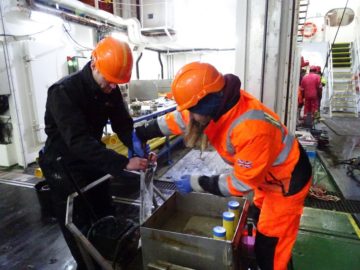
Zoë Roseby is a member of the science team from British Antarctic Survey (BAS) currently aboard the RRS Discovery. Read on to discover what the team will be investigating in […]
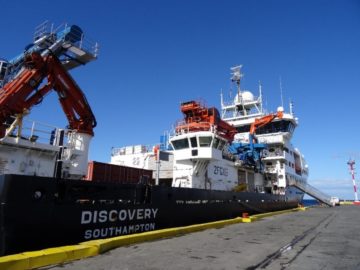
After our extended period of lie-up, I now have the slightly surreal pleasure of sitting at Rothera writing this, contemplating flying home tomorrow. We flew back from the field on […]
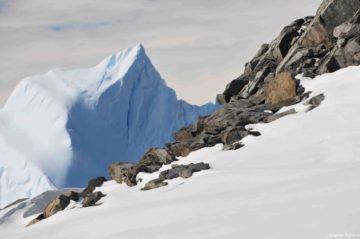
January the twenty sixth. My pre-deployment brief suggested that I should currently be partaking of all the luxuries Rothera Research Station has to offer. Enjoying that period of self-satisfaction which […]
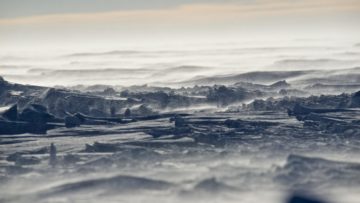
Reflections from the ANiSEED team in Marie Byrd Land Field Guide Al Docherty recounts his most memorable day of the field season so far: “7am the alarm goes off. I look […]
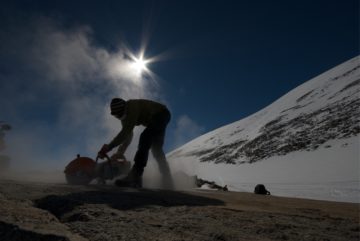
Every person who works in Antarctica has a different experience and takes away different memories because our perception is shaped so much by our previous life experiences. The four of […]
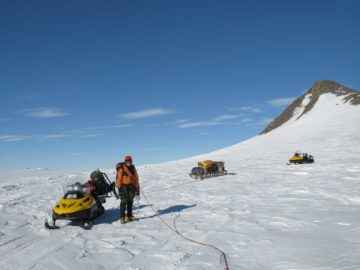
The challenges of glacier travel The ANiSEED project field area lies between two of the most rapidly changing glaciers in Antarctica, the Smith and Kohler Glaciers. These have thinned more […]
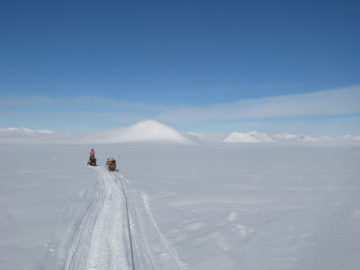
Greetings from Marie Byrd Land! The waiting is over….we finally arrived at our field site on 11th December, after a 4 hour flight from Sky Blu one of BAS’s fuel […]
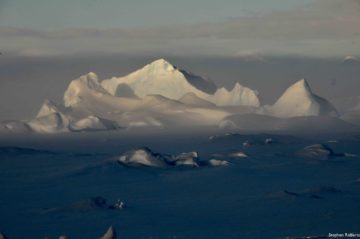
Geologist Jo Johnson waits patiently to go deep-field
Being a parent working in Antarctica
A long drive ahead….update from polar guides preparing for a geology project in remote Marie Byrd Land Whilst Steve Roberts and I are preparing to depart the UK for Rothera […]
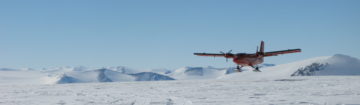
Science team goes deep field to Marie Byrd Land
A scientist’s view from Petermann Fjord, NW Greenland Three-and-a-bit days is what it takes to get from London to Thule air base in northwest Greenland. A quick flight to Copenhagen […]